
Architect: the French route from ENSA to the HMONP
The French route to becoming an architect: the real path (ENSA, DEEA, State Diploma, HMONP), the protected title, the Ordre and honest prospects.
Editorial team · Published on 23 July 2026
9 min read
Contents
- The architect role in brief
- Daily work: duties and setting
- A typical day (fictional example)
- What you study to become an architect: from the baccalaureate to the diploma
- The path at a glance
- Prospects, entry into work and pay
- An international perspective
- Who the job suits: qualities and interests
- Bridges and changes of direction
- Key takeaways
- Going further
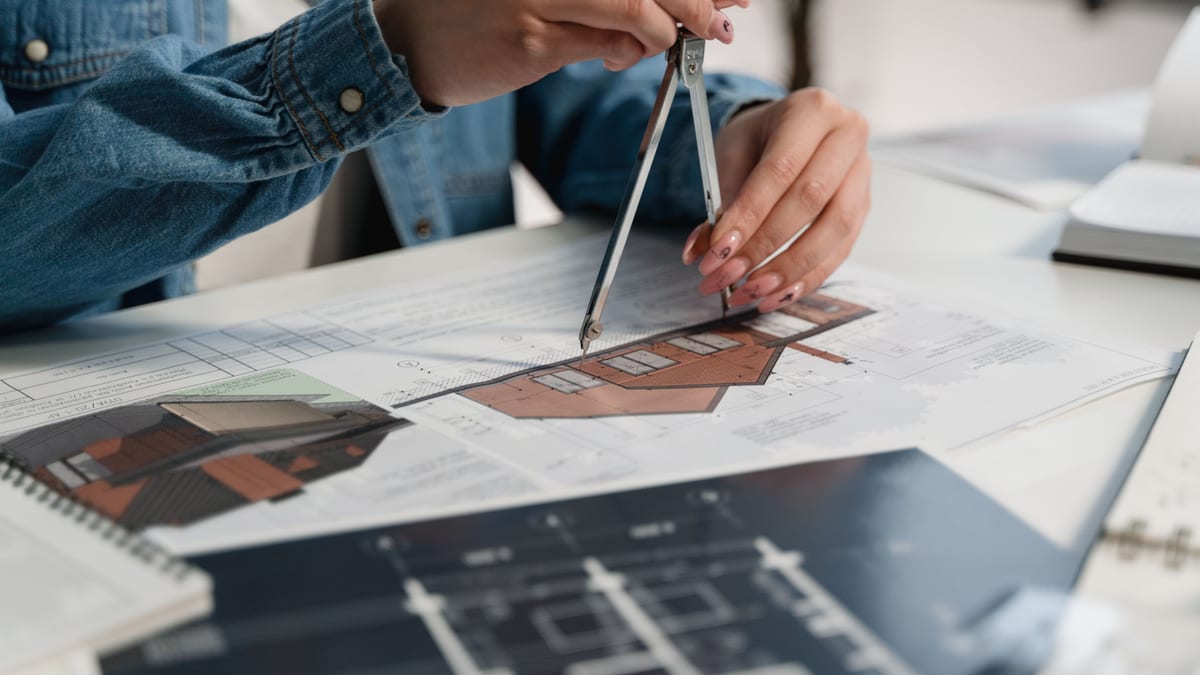
Architect is a job many lycée students picture through striking images of buildings and models. The reality is broader and more technical: designing spaces, yes, but also talking with clients and local authorities, respecting planning rules, managing a budget and coordinating a construction site through to handover.
This profile describes the French route to the profession. If your family is in the French or AEFE school system, or you plan to study and practise in France or the wider European Union, this is the path that concerns you. Two received ideas need correcting at the outset. First, “architect” is not simply a job title: in France it is a title protected by law, reserved for professionals registered with the Ordre des architectes, the country’s architects’ board. Second, holding the diploma is not enough to practise under your own name: there is a further step, the HMONP, often unknown to applicants.
This page sets out the exact path, from the baccalaureate to registration with the Ordre, the selectivity at each stage and what the daily work involves. It also draws a clear line between the architect and the interior designer, two neighbouring jobs with different legal frameworks, and adds an international section on how far the French qualification travels. The aim is an honest picture, neither discouraging nor idealised.
The architect role in brief
The architect designs buildings and spaces, from the first sketch to the handover of the site. The work spans housing as much as public facilities (schools, museums, hospitals), offices, retail or the renovation of older buildings. The mission covers two registers: design (imagining, drawing, fitting a project within a budget and a set of regulatory constraints) and project management (overseeing the works, coordinating firms, checking compliance).
The status varies. A large share of architects practise as self-employed professionals, alone or as partners in a practice. Others are salaried in a practice, an engineering firm, a developer or a local authority. The common thread: to hold the title and sign projects subject to a building permit, you must be registered with the Ordre des architectes. It is a regulated profession, governed by law no. 77-2 of 3 January 1977 on architecture.
The required level of study is high: six years at least. For scale, France counts around 30,000 architects registered with the Ordre, a figure broadly stable for some fifteen years (source: Archigraphie 2024, the profession’s observatory run by the Conseil national de l’Ordre des architectes, CNOA). The profession stays geographically concentrated, with the Paris region alone accounting for close to a third of those registered.
Daily work: duties and setting
Day-to-day work depends a great deal on the size of the practice and the type of projects, but a few duties recur:
- Listening to and framing a brief: understanding a client’s need (private individual, company, local authority), the budget, the site constraints and the planning rules.
- Designing: producing sketches, plans, physical or digital models, choosing materials and technical solutions.
- Preparing the regulatory files: assembling and lodging building-permit applications, dealing with the planning departments.
- Consulting firms: drafting the technical documents, comparing quotes, helping the client choose the contractors for the site.
- Overseeing the site: visiting, coordinating the trades, checking compliance and deadlines, handling the unexpected.
- Running the business: invoicing, client relations, developing the practice, because a self-employed architect is also a business owner.
Work alternates between the office (design, meetings, drawing and modelling software) and the field (visits, sites, appointments at the town hall). The architect works in a team with engineers, technical design offices, construction economists, building firms, landscape architects and public services. The pace can be intense, notably around competition submissions and the construction phases.
A typical day (fictional example)
Sarah, an architect of 29, salaried for three years in a mid-sized practice, starts her morning in modelling software adjusting the plans of a primary school ahead of a meeting with the structural engineers. Late in the morning she heads to a renovation site for a progress review with the shell-and-core contractor. In the afternoon she drafts technical documents for a contractor tender, then replies to a local authority on a permit file. This example is fictional and only serves to illustrate the alternation between design, site and administrative steps.
What you study to become an architect: from the baccalaureate to the diploma
At lycée, no specialism is required to apply to a school of architecture. Various combinations work: a scientific profile (Mathematics, Physics-Chemistry, Engineering Sciences) reassures on the technical side, while specialisms such as Arts or History-Geography, Geopolitics and Political Science (HGGSP) feed visual culture and the understanding of space. What counts most: a taste for drawing and representation, cultural curiosity and the ability to carry a project through.
The reference route is that of the Écoles nationales supérieures d’architecture (ENSA), France’s 20 public state schools of architecture, entered after the baccalaureate through Parcoursup. Admission is on application and, most often, with a motivation interview; it is selective. Two other accredited institutions also deliver the course (the École spéciale d’architecture in Paris, which is private, and INSA Strasbourg, which is public). The path builds in stages:
- First cycle (3 years) leading to the Diploma in Architectural Studies (DEEA), which carries bachelor’s grade (three years). It lays the foundations: design project, history and theory of architecture, construction, representation.
- Second cycle (2 years) leading to the State Diploma in Architecture (DEA), which carries master’s grade (five years). The studio project is central, with progressive specialisation.
- HMONP: the authorisation to practise as project lead under one’s own name (Habilitation à la maîtrise d’œuvre en son nom propre), about one year (six years total), most often prepared while working in a practice. It covers responsibility, regulation, and the management and economics of a project.
- Registration with the Ordre des architectes: this is what lets you hold the title fully and sign, in your own name, projects subject to a building permit.
The key point on the exact wording: the diploma that gives the title is the State Diploma in Architecture (DEA). But the DEA alone confers the title of state-qualified architect without allowing practice under your own name. For that, the HMONP is essential, followed by registration with the Ordre. With the DEA alone you can work as a salaried architect in a practice, under the responsibility of an authorised architect.
Note: the interior designer falls under an entirely different framework. That title is not protected by law and the route runs through other schools (applied arts, DN MADE, specialised diplomas). Our interior designer career profile sets out that distinct path.
The path at a glance
| Stage | Duration | Diploma / milestone |
|---|---|---|
| First cycle at ENSA | 3 years | Diploma in Architectural Studies (DEEA, bachelor’s grade) |
| Second cycle at ENSA | 2 years | State Diploma in Architecture (DEA, master’s grade, five years) |
| Authorisation | ~1 year | HMONP (authorisation to practise in one’s own name, six years) |
| Registration with the Ordre | After the HMONP | Architect title, right to sign in one’s own name |
Prospects, entry into work and pay
The market exists but stays demanding. The profession is not growing fast: the number of registered architects has been stable for some fifteen years, around 30,000 (Archigraphie 2024, CNOA). Activity depends heavily on the construction cycle and public commissions, which makes early years sometimes uncertain. Many new graduates begin as salaried architects in a practice before, in some cases, setting up on their own.
Starting pay is modest. A salaried architect starting out in a practice most often earns between 28,000 and 35,000 euros gross a year, roughly 2,300 to 2,900 euros gross a month (2024 ranges, several sector sources). The average income of a self-employed architect stood around 48,000 euros a year in 2024 (source: Archigraphie 2024, CNOA), but that average covers very wide gaps: between a sole practitioner in the regions and a partner in a recognised practice, the difference is considerable. An important note of honesty: a self-employed income is a profit before income tax, and setting up takes time before it stabilises.
Career moves are varied: starting your own practice, specialising (heritage, energy renovation, public facilities), joining an engineering firm, a developer or a local authority, moving towards urban planning, client-side project ownership, teaching or research. The environmental transition of the building sector (energy retrofits, reuse of materials) is also opening up developing fields of activity.
An international perspective
Because this profile describes the French route, a fair question follows: how far does the French qualification travel? For architects, the answer is unusually clear, because architect is one of the regulated professions covered by automatic recognition across the EU and the EEA under Directive 2005/36/EC.
The French diploma is automatically recognised in the EU and EEA. Architect sits alongside doctor, nurse, midwife, dentist, pharmacist and vet on the short list of professions whose training is harmonised at European level (minimum five years of study) and whose qualifications appear on a common list. In practice, this means a French DEA holder authorised to practise can have their qualification recognised automatically in another EU or EEA member state (and Switzerland), without re-sitting the whole training, subject to registration formalities and, where relevant, a language requirement in the host country. This is the strongest form of portability that exists for a professional title, and it is a genuine advantage of the French route for a family that may move within Europe.
Outside the EU/EEA, recognition is not automatic. In the United Kingdom, for instance, the title of architect is protected and reserved to those registered with the Architects Registration Board (ARB); a French architect must apply to the ARB, whose route can involve an assessment of qualifications and experience. In the United States, licensure is handled state by state through the NCARB framework, again on a case-by-case basis. So the French diploma is a strong foundation everywhere, but practising under the protected title outside Europe means checking the local registration route in advance.
So who is the French route for? It makes clear sense if your family is already in the French or AEFE school system, if you plan to study or practise in France, or anywhere in the EU/EEA where the diploma and its master’s grade carry directly through automatic recognition. If the firm plan is to practise in a specific non-European country (the UK, the US, the Gulf), it is worth mapping that country’s registration route early, or considering a local qualification, rather than assuming the French diploma alone will let you sign work under the protected title there.
Who the job suits: qualities and interests
The job suits people who enjoy designing in space, drawing, solving concrete problems and carrying a project from end to end. It calls for rigour (regulatory and budget constraints are strong), stamina (the studies are long and intense), good people skills to deal with clients, firms and administrations, and a solid visual culture. The ability to move from the idea to the technical detail is central.
A few honest counter-indications: a rejection of technical and regulatory work sits badly with a reality where building permits, standards and budgets weigh heavily; a need for a high, quick income risks being disappointed by modest early years; difficulty coping with the load of submissions and construction sites can tell. This is not a “free artist” job: it is a design profession framed by many responsibilities.
To check that the appeal rests on lasting interests and not only on an image, it can help to test these qualities against your own inclinations before committing. Our article on the main families of careers and fields helps you situate architecture among the other routes, and an orientation review helps refine the choice.
Bridges and changes of direction
Starting a school of architecture without going all the way to registration with the Ordre is not a failure. The DEEA and the DEA open onto neighbouring jobs: urban planning and regional development, client-side project ownership, design, scenography, heritage, teaching, or the technical trades of construction. Our urban planner career profile presents one of these close paths.
Conversely, you can reach architecture after another start: reorientations from a first university year, a preparatory class or an art school are possible, since selection on application values motivation and personal work. Internal bridges also exist between architecture, interior design and spatial design, provided you keep in mind that these jobs do not fall under the same legal framework.
Key takeaways
- Protected title: only a professional registered with the Ordre des architectes may hold the title and sign projects subject to a building permit (law of 3 January 1977).
- Required diploma: the State Diploma in Architecture (DEA, master’s grade, five years), earned at an ENSA, then the HMONP (six years) to practise under your own name.
- Route in: the 20 public ENSA recruit after the baccalaureate through Parcoursup, on application and interview; admission is selective.
- Real duration: at least six years after the baccalaureate (3 years DEEA, 2 years DEA, ~1 year HMONP).
- Pay: modest at the start (28,000 to 35,000 euros gross a year in a practice) and scattered incomes, average self-employed income around 48,000 euros a year (Archigraphie 2024).
- Watch point: do not confuse it with the interior designer, whose title is not protected and whose route is different.
- International note: architect is one of the professions with automatic recognition across the EU/EEA (Directive 2005/36/EC). Outside Europe (UK, US), registration is case by case.
Going further
- The guide’s career profiles hub
- Interior designer career profile
- Urban planner career profile
- Regulated professions and recognition in the EU (European Commission)
- Ordre des architectes: registering with the board
Written by the Axiom Orientation team.
Frequently asked questions
How many years does it take to become an architect in France?
Is the DEA enough to work as an architect?
How do you get into a school of architecture in France?
Are architect and interior designer the same job?
How much does a newly qualified architect earn?
Read more

Career profiles: exploring French careers by field to find your path
Axiom's directory of career profiles: start from the job to build a solid path, with the real French entry route, honest prospects and an international angle.
10 min read

Interior designer in France: studies, schools and careers
The French route to becoming an interior designer: the DN MADE and DSAA path, the unprotected title, CFAI recognition, careers, pay and how the skill travels.
11 min read
Urban planner: the French route, master's and job market
Becoming an urban planner in France: the master's in urban planning, the voluntary OPQU qualification, employers and salaries. Axiom career profile.
11 min read

Becoming an AI Engineer in France: Studies and Prospects
Becoming an AI engineer in France: bac+5 studies, the scientific foundation required, honest prospects and pay. An Axiom career profile.
11 min read
Photo credits: Tima Miroshnichenko · Pexels · source