












 France
  English
  United Arab Emirates
  España
  Россия
  中国
中国 How to Choose Your French Bac Specialisations: A Guide for Students Abroad
Your child is in Seconde at a French lycée abroad and must choose 3 specialisations from 13? Here is how the system works, explained for parents used to GCSE or IB, and how the choice shapes university applications in France and elsewhere.
If your family is part of the French school network abroad (an AEFE lycée, a Lycée Français, or a French section within an international school), you have probably heard the word “spécialités” mentioned at parent evenings, usually with a note of urgency. In Seconde, the equivalent of Year 11 or Grade 10, every student on the French track must choose the subjects that will shape the final two years of the Baccalauréat.
If you are more familiar with GCSE options, A-level choices or the IB Diploma subject groups, the French system can feel opaque. This guide explains how it actually works, and why the decision matters for university applications both in France and elsewhere.
How specialisations compare with GCSE and IB choices
Since the 2019 reform, the French Baccalauréat no longer has fixed streams (the old S, ES and L series). Instead, every student builds a personal profile:
- In Première (the year after Seconde), students take a common core plus three specialisation subjects, each taught for four hours a week.
- In Terminale (the final year), they keep only two of those three, studied in greater depth.
The closest analogy for IB families: the common core plays the role of the six subject groups, while the specialisations work a little like Higher Level choices, the subjects that define your academic identity. For families used to the British system, choosing specialisations sits somewhere between GCSE options and A-level choices: fewer subjects than GCSE, chosen earlier than A-levels, and dropped one at a time rather than all decided at once.
Two practical differences are worth flagging. First, the choice happens in Seconde, which is early: students are still adjusting to the pace and expectations of the lycée. Second, the subject dropped at the end of Première still counts towards the Bac through continuous assessment, so nothing is wasted, but the two subjects kept in Terminale carry the most weight.
Start thinking early, without forcing a vocation
The point is not to decide on a career at fifteen. It is to ask two simpler questions: “What do I genuinely enjoy?” and, just as importantly, “What do I definitely not want to spend the next two years doing?” The right combination usually sits at the intersection of personal interest and plausible future direction, and ideally serves both.
Sometimes a passion does turn into a profession. But even when it does not, a student who likes their subjects works better, and that shows in the grades that universities will later read.
One caveat for the start of Seconde: the transition to lycée is demanding in itself, especially for students who have switched between curricula or countries. Keep a sense of proportion and a healthy routine (sleep, sport, a social life). Stability in daily life is part of academic stability.
Choose in line with actual results
A specialisation profile has to be consistent with a student’s results, because selection committees will see both. If your child dreams of becoming a vet but is struggling in SVT (biology and earth sciences), there are two honest paths: use the start of Seconde to prove what they are capable of, or accept that the goal needs adjusting. It is also worth asking why they want that career. If the answer is a love of animals, there are other routes to working with animals, and widening the search early costs nothing.
Targeted private tuition can also help close a gap in a key subject before the choice is locked in. For expatriate families this is often the most practical lever, since online lessons follow the French programme wherever you live. Just keep the added hours reasonable and consistent with the student’s schedule, energy and your budget.
The thirteen specialisations
There are 13 specialisations, from which students choose 3:
- Arts (circus arts, visual arts, cinema and audiovisual studies, dance, history of art, music, theatre)
- Biology and ecology
- Physical education, sporting practice and culture
- History, geography, geopolitics and political science
- Humanities, literature and philosophy
- Foreign and regional languages, literatures and cultures (English, English in the contemporary world, German, Spanish, Italian, Portuguese, plus regional languages)
- Literature, languages and cultures of Antiquity (Greek, Latin)
- Mathematics
- Digital technology and computer science
- Physics and chemistry
- Life and earth sciences
- Engineering sciences
- Economics and social sciences
At the end of Première, two of the three are kept for Terminale.
Can a student change specialisation during Première? In principle yes, but several factors come into play, availability first among them: places are limited, and in a lycée abroad the range of alternatives is often narrower than in France.

Photo by Jan Huber on Unsplash
How the timetable works
Alongside the specialisations, every student follows the common core:
French: 4h
History and geography: 3h
Modern languages (two languages): 4h30
Scientific education: 2h / 3h30
Physical education: 2h
Moral and civic education: 18h per year
Each specialisation adds four more hours per week in Première.
One recent change to note: since the 2023 school year, mathematics is back in the common core. Students who also take mathematics as a specialisation have two hours of scientific education in the core; those who do not take the maths specialisation have 3h30.
Optional subjects
On top of this, students may add one option, chosen from:
Third modern language / sign language: 3h
Latin or Greek: 3h
Physical education
Arts (visual arts, cinema, dance, history of art, music or theatre): 3h
Horse studies and riding: 3h
Agronomy, economics and territories: 3h
Social and cultural practices (in agricultural lycées): 3h
What it means for university applications
This is where the choice deserves real attention, particularly for internationally mobile families, because the two Terminale specialisations effectively define the student’s academic profile.
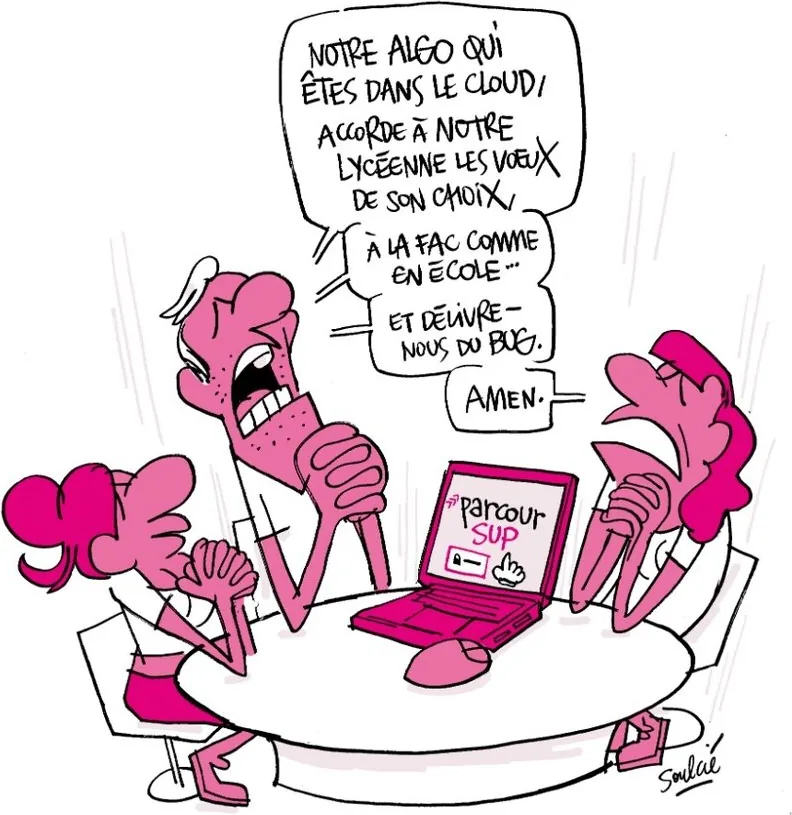
For France, applications go through Parcoursup, and selective programmes read the specialisation profile the way British universities read A-level subjects. Medicine and veterinary routes expect a strong science profile, engineering schools and their preparatory classes look for mathematics with physics and chemistry, business-oriented programmes value mathematics or economics and social sciences, and so on. A profile that does not match the target course is a genuine handicap, not a formality.
For universities outside France, admissions teams in the UK, the US, Canada and elsewhere are familiar with the French Bac and look at the specialisations as subject evidence. A student aiming at a quantitative degree abroad will usually be expected to have kept mathematics through Terminale, just as they would be expected to hold an A-level or an IB Higher Level in the subject. If your child may apply in more than one country, choose a combination that keeps those doors open rather than optimising for a single system.
The practical rule: work backwards from the two or three plausible study destinations, list what each expects, and check that the chosen trio covers them.
Check what your lycée actually offers
A final point that matters even more abroad than in France: not every lycée offers every specialisation.
The most common ones, available in the majority of lycées, are:
- History, geography, geopolitics and political science
- Humanities, literature and philosophy
- Foreign and regional languages, literatures and cultures
- Mathematics
- Physics and chemistry
- Life and earth sciences
- Economics and social sciences
The rarer ones include:
- Engineering sciences
- Ecology, agronomy and territories (in agricultural lycées)
- Digital technology and computer science
- Arts
- Literature, languages and cultures of Antiquity
- Physical education, sporting practice and culture
In the French network abroad, smaller establishments cannot always open the full range, so ask early which specialisations your lycée actually runs, and which combinations its timetable allows. If the desired subject is not available locally, distance learning through the CNED can be a fallback worth discussing with the school.
How Axiom Academic supports families abroad
Axiom Academic works with families of the French school network worldwide. Our private tutors teach the French programme online and in person in many cities, so a student can strengthen a key subject before choosing, or keep pace in a demanding specialisation afterwards. Our educational advisers also help families think through the specialisation choice itself, with both French and international university goals in mind. The first lesson comes with a satisfied-or-refunded guarantee, and you can contact us to talk through your child’s situation.
Key takeaways for families abroad
- Students choose 3 specialisations from 13 in Seconde, then keep 2 for Terminale
- Specialisations act like A-level or IB Higher Level choices: they define the academic profile
- The choice must match actual results, the target degrees and Parcoursup expectations
- Universities abroad read specialisations as subject evidence, so keep key doors open
- Lycées abroad rarely offer all 13 subjects: check the local list early, with CNED as a fallback
- Since 2023, mathematics is back in the common core for every student