









 France
  English
  United Arab Emirates
  España
  Россия
  中国
中国 The French School System Explained for International Families
Descending grade numbers, a national curriculum and a diploma everyone calls "the bac": the French school system can puzzle newcomers. Here is the outside-in guide for international families, with UK, US and IB equivalents at every stage.

If you are an international family considering a French school, or you have just enrolled your child in one, the system can feel like a world of its own: grade names that count backwards, a national curriculum set in Paris, and a final diploma, the baccalauréat, that everyone simply calls “the bac”. The good news is that behind the unfamiliar vocabulary lies one of the most structured and portable school systems in the world, taught in accredited French schools on every continent.
This guide explains the French system from the outside in: how the levels map onto UK and US grade levels, what the key exams are, how the bac compares with A-Levels and the IB Diploma Programme, and why so many internationally mobile families choose this route.
The four stages of French schooling
French education is organised into four successive stages, from early childhood to age 18:
- École maternelle (preschool, ages 3–6): three years known as petite, moyenne and grande section. Broadly the equivalent of Nursery and Reception in the UK, or preschool and kindergarten in the US, with a strong focus on language, socialisation and early learning.
- École élémentaire (primary school, ages 6–11): five years called CP, CE1, CE2, CM1 and CM2, covering the fundamentals of reading, writing, mathematics and discovery of the world.
- Collège (middle school, ages 11–15): four years, counted backwards from 6e to 3e.
- Lycée (high school, ages 15–18): three years, Seconde, Première and Terminale, leading to the baccalauréat.
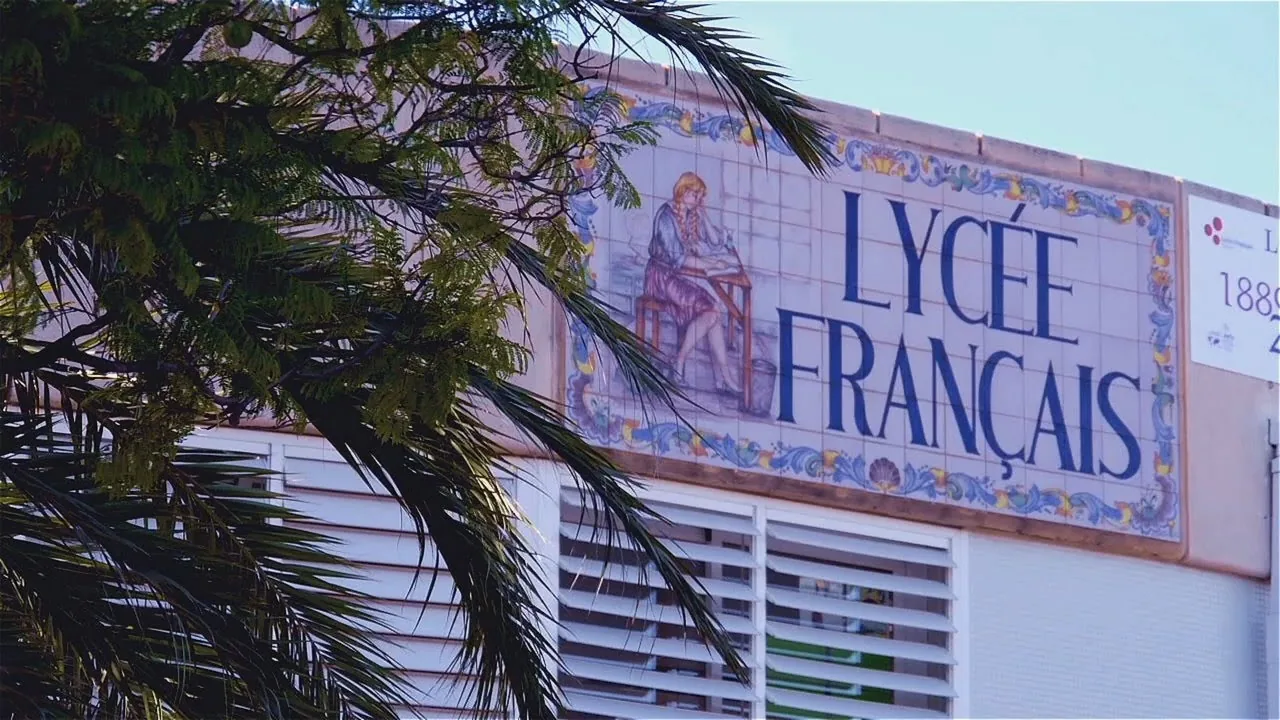
One quirk surprises every newcomer: after primary school, the French count grades in descending order. A child enters collège in 6e (sixième) and finishes in 3e (troisième), then moves through lycée from Seconde to Terminale.
How the grades line up with UK and US systems
A rough conversion helps enormously when you are reading school reports or planning a move:
| French grade | Age | UK equivalent | US equivalent |
|---|---|---|---|
| CP | 6–7 | Year 2 | Grade 1 |
| CM2 | 10–11 | Year 6 | Grade 5 |
| 6e | 11–12 | Year 7 | Grade 6 |
| 3e | 14–15 | Year 10 | Grade 9 |
| Seconde | 15–16 | Year 11 | Grade 10 |
| Première | 16–17 | Year 12 (Lower Sixth) | Grade 11 (Junior) |
| Terminale | 17–18 | Year 13 (Upper Sixth) | Grade 12 (Senior) |
The deeper point is that the French system is a single, national framework: programmes are identical everywhere, including in accredited French schools abroad. A family relocating from Dubai to Singapore finds the same curriculum, the same expectations and the same exams, which is precisely why the system travels so well.
Collège and the brevet, the first national exam
Collège broadens the curriculum: a second foreign language, physics and chemistry, technology. It is also the stage where French schooling starts building its trademark working methods, note-taking, structured essays and oral presentations.
At the end of 3e, students sit the Diplôme national du brevet (DNB), the first official exam of the French pathway. Families from a British background often think of it as a lighter, earlier cousin of GCSEs: it comes at around age 15 rather than 16, and its main value is formative, giving students their first experience of a national exam with its calendar, conditions and preparation.
The end of 3e is also the first major fork in the road: students continue either into the general and technological track or into the vocational track.
Lycée and the baccalauréat: what changed with the reform
This is where outdated information circulates most, including among French parents. Since the reform that took effect with the 2021 baccalauréat, the old general streams S, ES and L no longer exist. The general bac now rests on two pillars:
- a common core taken by all students: French then philosophy, history and geography, modern languages, scientific education, physical education, and moral and civic education;
- specialisation subjects chosen by the student: three in Première, of which two are kept in Terminale.
The menu of specialisations includes mathematics, physics and chemistry, biology and geology, economics and social sciences, history-geography-geopolitics and political science, humanities-literature-philosophy, languages, computer science, arts and more. Each student builds a tailored profile, for instance maths plus physics for a future engineer, or economics plus geopolitics for political science.
If you know the British or IB systems, a useful way to frame it: the reformed bac sits between the two. It is broader than A-Levels, where students typically narrow down to three or four subjects, but it works like the IB Diploma Programme in that everyone keeps a wide common core alongside their chosen strengths.
How the bac is graded
The final bac grade combines two components:
- continuous assessment, worth about 40% of the grade, based on school results in Première and Terminale;
- final exams, worth about 60%: the anticipated French exams (written and oral) at the end of Première, then in Terminale philosophy, the two specialisation subjects and the Grand oral, a structured oral defence before a jury that will feel familiar to anyone who knows the IB’s oral components.
The practical consequence for students: consistency matters from Seconde onwards. Every term counts, and there is no cramming everything into one final exam session, a real cultural shift from the old all-or-nothing bac.
The technological and vocational tracks
Alongside the general bac, the technological track offers eight series, including STMG (management), STI2D (industry and sustainable development), STL (laboratory sciences), ST2S (health and social care), STD2A (design and applied arts), STHR (hospitality), S2TMD (performing arts) and STAV (agronomy). The vocational bac prepares students for a trade while keeping further study open.
After the bac: Parcoursup and higher education
Admission to French higher education runs through a national platform called Parcoursup, where Terminale students list their choices: university degrees, the selective classes préparatoires, technical institutes and post-bac schools. Applications rely heavily on school reports from Première and Terminale, which further raises the stakes of continuous assessment and of the specialisation choices made at the end of Seconde.
For internationally minded families, an important reassurance: the baccalauréat is recognised worldwide and opens the doors of universities in many countries beyond France. A student can complete the French system in Abu Dhabi and apply to universities in the UK, the US, Canada or elsewhere.
Why international families choose the French system
Beyond the practicalities, several strengths come up again and again:
- a demanding general culture, built on ambitious programmes in literature, science and the humanities;
- systematic training in critical thinking and argumentation: essays, textual analysis, mathematical proof, structured debate;
- a clear, structured progression, with the same milestones in every school worldwide;
- the international recognition of the baccalauréat, a real asset for mobile families;
- since the reform, greater personalisation at lycée thanks to the specialisation subjects.
It suits students who enjoy understanding things in depth, writing and arguing, and families who want academic rigour combined with genuine international mobility, whether or not anyone at home grew up in the French system.
Following the French curriculum abroad
The French curriculum is one of the best established outside its home country. The AEFE network (the French agency for education abroad) federates accredited schools on every continent, which follow the official programmes and enter their students for the same exams as in France, from the brevet to the baccalauréat.
For families far from an accredited school, the CNED, the French national distance-learning centre, allows students to follow the French programme remotely, either as full schooling or as a complement. It is a common solution in areas without a French lycée.
In every case, continuity is the great advantage: a child can start school in Paris, continue in Abu Dhabi and sit the bac in London without ever changing systems.
How Axiom Academic supports international families
At Axiom Academic, we have spent years supporting expatriate and international families whose children attend French schools around the world. Our private tutors work at every stage: consolidating fundamentals in primary, academic support and brevet preparation at collège, then guidance at lycée on the specialisation subjects and the bac exams, Grand oral included, with tutors who understand both the French system and the international context your family lives in.
Because the choice of specialisations and the Parcoursup strategy need to be prepared well in advance, our educational counsellors also help students and parents build a coherent plan, adapted to the child’s profile and to how the system actually works today. And to discover our approach with complete confidence, the first lesson comes with a money-back guarantee. Feel free to get in touch to talk about your child’s situation.
Key features of the French school system
- Four structured stages: maternelle, primary, collège and lycée, with identical national programmes in every school worldwide
- Grades map cleanly onto UK and US levels: Terminale is the equivalent of Year 13 or Grade 12
- Brevet (DNB) at the end of 3e: the first national exam, a lighter, earlier cousin of GCSEs
- Reformed general bac: a broad common core plus 3 specialisation subjects in Première, 2 kept in Terminale (the old S, ES, L streams are gone)
- Bac grading: about 40% continuous assessment and 60% final exams, including the Grand oral
- Broader than A-Levels, structured like the IB DP: wide core plus chosen strengths, and internationally recognised by universities
- Fully portable abroad: AEFE accredited schools on every continent, plus distance learning through CNED