












 France
  English
  United Arab Emirates
  España
  Россия
  中国
中国 Inclusive Education: What It Really Means
Inclusion is one of those fashionable words we hear a lot without always knowing what it actually means, or what is really at stake for SEN students and their schools.
Inclusion is one of those fashionable words we hear a lot, perhaps too much, without always knowing what it actually means or what is really at stake behind it.
The conversation around inclusion grew out of the earlier debate on diversity. Where diversity was mostly concerned with people’s ethnic and religious backgrounds and their place within a national community, inclusion goes further: it asserts that differences, all differences, must be taken into account in the social and everyday dimensions of life.
Gender-inclusive language, for instance, has prompted a reflection on how the feminine and the masculine coexist in language and how that shapes society. Beneath the surface, it raises further questions about what “feminine” and “masculine” really mean, this time in connection with LGBTQIA2S+ issues, the acronym itself being a condensed attempt to acknowledge every possible identity.
In the same way, an inclusive city is a space open to everyone, which includes, for example, people with reduced mobility and the elderly: categories of the population that are not always, and frankly not often, considered when urban spaces and street furniture are designed.
Inclusion at school
So what, then, is an inclusive school? Here is how the French Ministry of Education defines it:
The right to education for all children, whatever their disability, is a fundamental right. The inclusive school aims to guarantee quality schooling for every student, from nursery through to the end of secondary school, by taking into account each child’s individuality and special educational needs.
Of course, “individuality and special educational needs” refers primarily to students with disabilities, what international schools call SEN (special educational needs) students. Although inclusive education originally also covered other groups, such as travelling communities or newly arrived students, this article will focus on the question of disability and learning support.
Which raises two questions: what is a disability? And why does it matter that a child with special educational needs follows a “mainstream” education alongside their peers?
Until fairly recently, parents of children with disabilities tended to place their child in a specialised institution, where they were looked after by professionals trained in their specific condition and surrounded by classmates in the same situation.
Today the paradigm has shifted. The aim, as far as possible, is to integrate these children into mainstream schools, in ordinary classrooms and during the ordinary teaching hours allocated to those classes, often with an individualised education plan (IEP) setting out the accommodations they need. All children are born free and equal in rights, so it is only natural that every child should be entitled to the same schooling as everyone else. And this is not the approach of any one country: it is part of a broad international movement, driven by major institutions such as UNESCO and the United Nations.
The celebrated Brazilian educationalist Carlos Roberto Jamil Cury, for example, writes that, in principle, inclusive education is a form of schooling in which all learners enjoy the same rights as their peers, without discrimination based on sex, race, ethnicity, religion or ability, and therefore have the right to attend the same schools and take part in the activities of students their own age. That, in a nutshell, is the whole idea.
It is also worth knowing that every country approaches inclusion differently. Italy is often held up as a model in this field: since 1971, “support teachers” have been working alongside children in mainstream classrooms, helping them follow the curriculum and, in many cases, successfully sit their exams. If the subject interests you, we recommend looking into the emblematic figure of Franco Basaglia. The overall record is remarkably positive, although the effects have ultimately been more social than academic.
The benefits, in fact, run both ways. They concern the child with special educational needs, who is not set apart from society, the school being a microcosm of society itself. And they concern the other children, who, by welcoming a classmate with a disability, learn tolerance and encounter difference in their daily lives. After all, that too is what school is for.
Canada also has long experience of inclusive schooling, although it varies from province to province. The definition given by the government of New Brunswick strikes me as particularly eloquent, especially in its link with philosophy:
Inclusive education is both a philosophy and a set of teaching practices that allow every student to feel valued, confident and safe, so that they can reach their full potential. It rests on a system of values and beliefs centred on the best interests of the child, fostering not only active participation in learning and in school life, but also a sense of belonging, social development, and positive interaction with peers and the school community.
In France, the public debate on disability took shape in the early 2000s. Many will remember the famous open letter from the philosopher Julia Kristeva to President Chirac:
I understand those who prefer to replace the term “integration” with “insertion” or “inclusion”. Far from being politically correct, this semantic concern is an invitation not to “integrate” in the sense of erasing difference, but to include people who are different within public spaces (schools, workplaces, and so on), provided that individualised pathways and tailored support are put in place there.
The Conseil National Handicap was one of the first bodies in France to “de-insularise” disability, a phrase that emerged from a 2004 international congress on disability and cultural change.
A law passed in February 2005 was the first to state that every child, including children with disabilities, has the right to enrol in their local neighbourhood school. But it took until 2013, and the law on rebuilding the school system, for inclusion to be finally recognised as one of the founding pillars of the school as an institution.
Why the school of tomorrow can only be inclusive
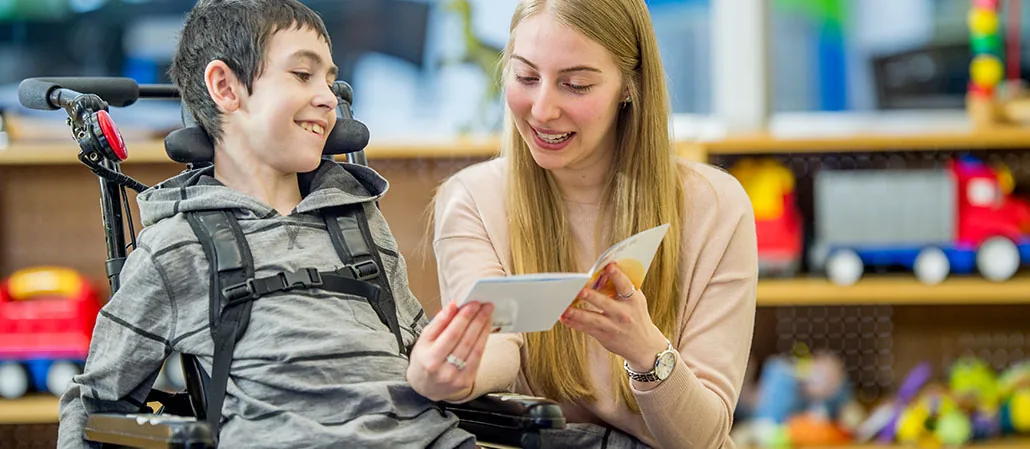
It seems self-evident: the school of tomorrow will be inclusive, or it will not be at all. Turning back the clock would be utterly anachronistic, and some countries are frankly lagging behind in this area. Experiments are underway all over the world. The results are sometimes mixed or uneven, of course, but overall, far more societies are putting inclusion into practice than we tend to imagine. What is missing is a shared, big-picture view: a way of pooling these experiences and making them known to the families and professionals who care about this subject.
How Axiom Academic supports SEN students and their families
At Axiom Academic, we work every day with expatriate families whose children learn differently: dyslexia, dyspraxia, attention difficulties, or simply a pace that does not match the rhythm of a busy international classroom. Our one-to-one tutors adapt their methods to each child, complement the work of the school’s learning support department, and help students build the confidence that inclusion is ultimately all about. Every engagement starts with a first lesson covered by our satisfied-or-refunded guarantee. To discuss your child’s needs, get in touch with our team.
Sources used for this article:
- The work of Charles Gardou
- Éric Plaisance’s article on inclusive education
- The French Ministry of Education’s pages on the schooling of students with disabilities (education.gouv.fr)
- Superando.it, on fifty years of school inclusion in Italy
Key takeaways from this article
- Inclusion goes beyond diversity: it means adapting schools, cities and public life to every difference
- Inclusive education gives SEN students the right to learn in mainstream classrooms alongside their peers
- Italy's support teachers (since 1971) and Canada's provincial models show what long-term inclusion looks like
- Individualised education plans (IEPs) and learning support turn the principle of inclusion into daily practice
- The benefits run both ways: SEN students stay part of society, and their classmates learn tolerance
- Axiom Academic's one-to-one tutors complement school learning support teams for children who learn differently